
GLOBAL ACTION NETWORK
Sustainable Food from the Oceans and Inland Waters
for Food Security and Nutrition
Sustainable food from the oceans and inland waters plays a significant role for food security and nutrition. This Global Action Network mobilizes actions for sustainable aquatic food systems to include aquatic foods as a key food source for achieving food security and improved nutrition in the Decade of Action on Nutrition (2016–2030) in line with the UN Sustainable Development Goals (SDGs). In 2026, the Network’s deliverables – bridging the UN Decade of Action on Nutrition and the UN Decade of Ocean Science – were endorsed as official contribution to the UN Decade of Ocean Science for Sustainable Development (2021–2030).
Official network under the UN Decade of Action on Nutrtion.
Officially endorsed by the UN Decade of Ocean Science for Sustainable Development

Actions and Knowledge

Newsletters
Related Events
World Food Forum, 8–16 October 2026, Rome, Italy
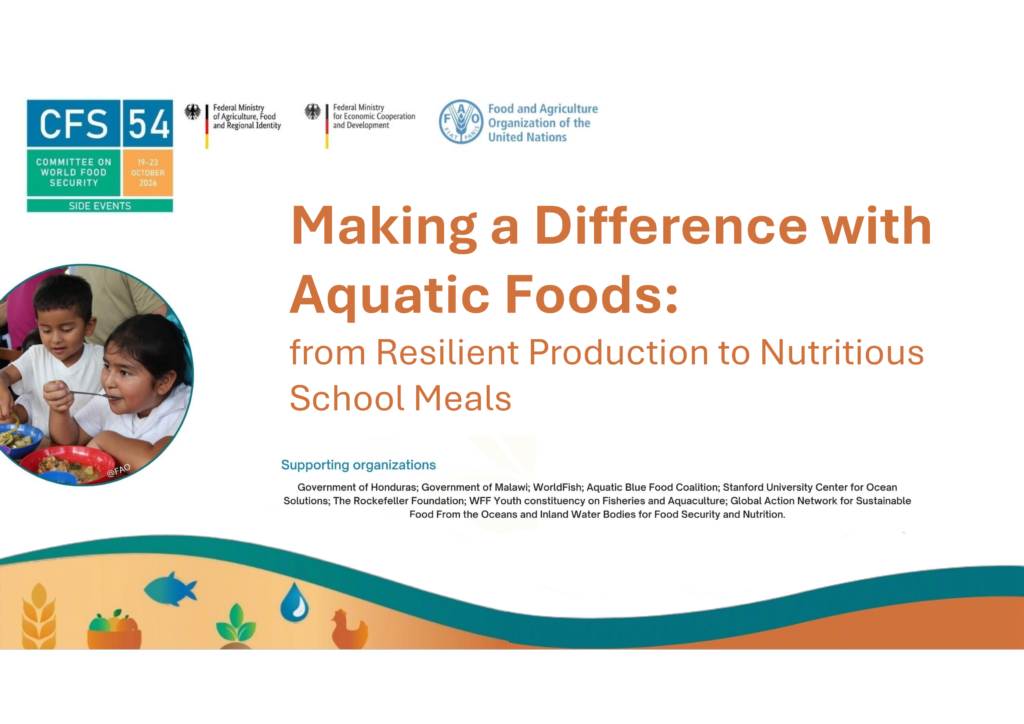
CFS 54, 19–23 October 2026, Rome, Italy
UN Biodiversity Conference – COP 17, 19–30 October 2026, Yerevan, Armenia
UN Climate Change Conference – COP 31, 9–20 November 2026, Antalya, Türkiye
UN Water Conference, 2–4 December 2026, Abu Dhabi, United Arab Emirates
Global Forum for Food and Agriculture, 11–15 January 2027, Berlin, Germany
Ocean Decade Conference, 7–9 April 2027, Rio de Janeiro, Brazil
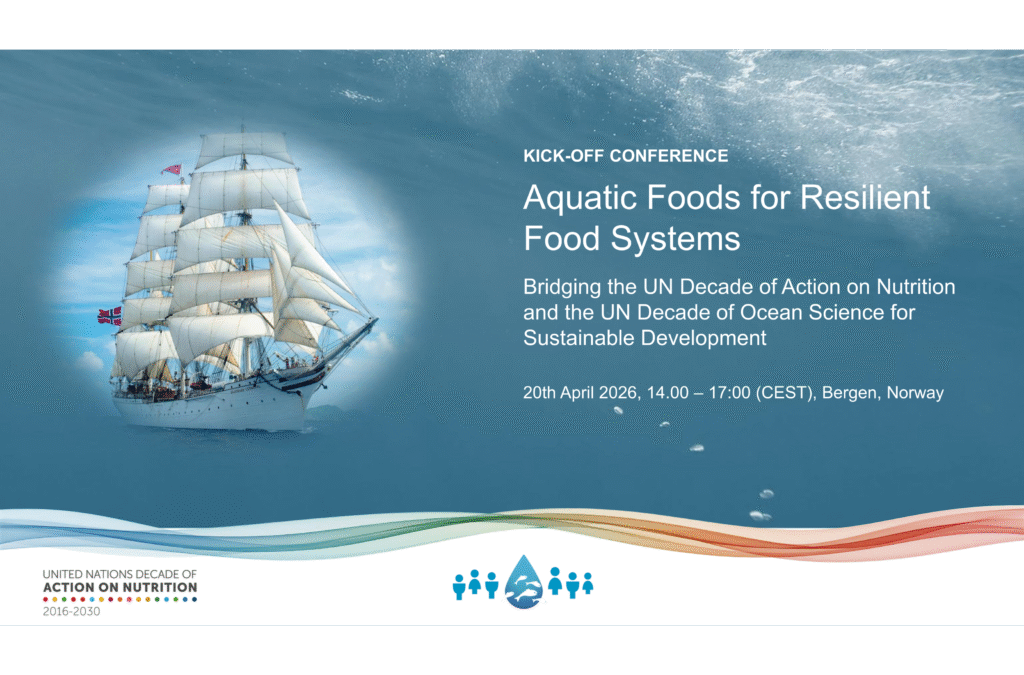
One Ocean Week,17–23 April 2027, Bergen, Norway
FIMEC Symposium, 10–13 May 2027, Penang, Malaysia
Eightieth World Health Assembly, 23–30 May 2027, Geneva, Switzerland

Budstikke
The Global Action Network’s Budstikke carries key messages.
Aquatic foods must be systematically recognised and valued for their nutritional contributions
Nutrition data must be collected and used for decision-making
Aquatic food systems need stronger policy integration and investment readiness
Local innovation can turn aquatic foods into accessible nutrition
Aquatic foods are crucial for food security and nutrition
It starts in a healthy ocean and there are many challenges along the way to ensure that sustainable, safe and nutritious, aquatic foods, are eaten by people as part of a healthy diet
Research and knowledge is needed at all steps
AAORIA has a role in providing this knowledge
Aquatic foods are essential for food security, nutrition, and sustainable food systems – a holistic approach is needed – building capacity – leaving no one behind.
Sustainable fisheries require stronger governance and international cooperation, crime must be addressed to secure access.
Strong analytical data is the foundation for keeping seafood safe, nutritious, and trusted – locally and globally.
Monitoring and building knowledge on safe and nutritious aquatic foods require cross sectorial collaboration. Gaps between guidelines and consumption must be closed.
Bridging the Ocean Decade and the Decade of Nutrition can accelerate global action.
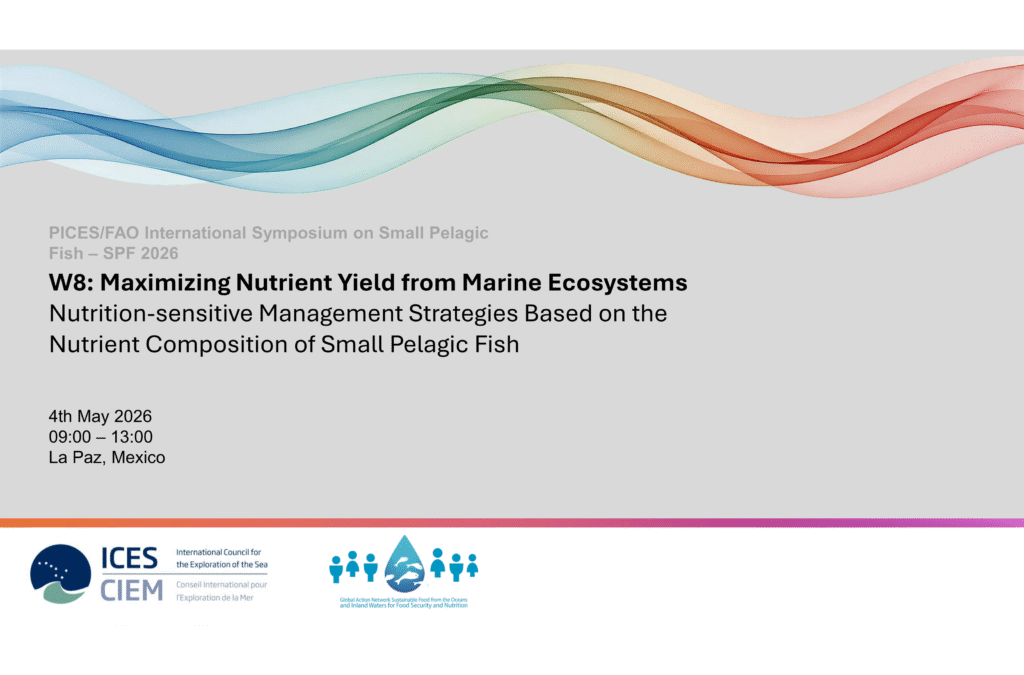
Small pelagic fish are nutrient-rich foods essential for food security, nutrition, and sustainable food systems.
Fisheries management should account for nutrient yields, not only biomass and economic returns.
Balancing direct human consumption and fishmeal production is critical to maximizing nutritional benefits.
Unlocking the full potential of small pelagic fisheries requires collaboration across nutrition, fisheries, ecosystem, and food systems sectors.
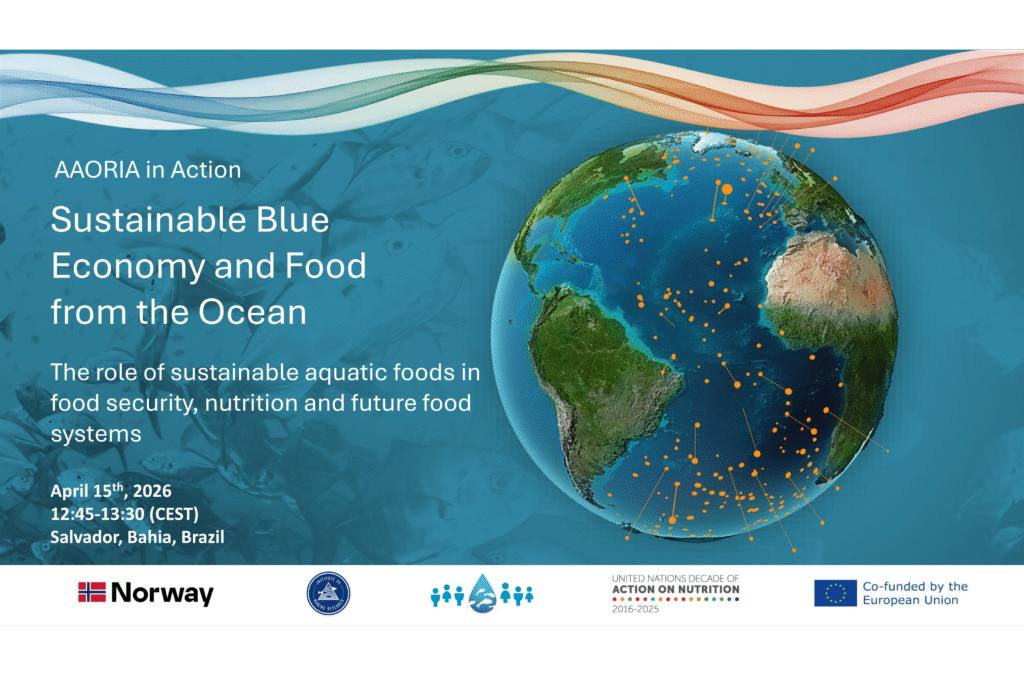
Aquatic foods are nutrient-rich, low footprint climate solution, core of a just and sustainable food system.
Fishers, aquaculture workers and traditional communities: protagonists and guardians of territorial knowledge, they must shape policy.
Cross-border and cross-sector cooperation builds resilient, low-emission and inclusive aquatic food systems.
Evidence-based, culturally adapted and accessible information and education turn aquatic foods into everyday healthy diets for all.
Reach children early, positive seafood experiences and mindset interventions in schools build lifelong healthy, sustainable habits.
Nutritionists should be more visible in food system dialogues.
Food system transformation is a smart investment and requires bundled actions by multiple actors.
Efficient regulations, innovations and shift in mindset and social norms are also crucial.
School meals should follow climate-friendly dietary guidelines and be introduced gradually accompanied by a pedagogical concept.
Safe foods from the ocean with efficient monitoring system are important.
Increase in seafood consumption can promote both human health and sustainability.
International and regional cooperation is essential.
Science and evidence-based policy are fundamental to sustainable ocean governance and sustainable aquatic food systems.
Capacity building and inclusion are key to long-term sustainability.
The role of aquatic foods in nutrition and food security must be recognized and strengthened.