
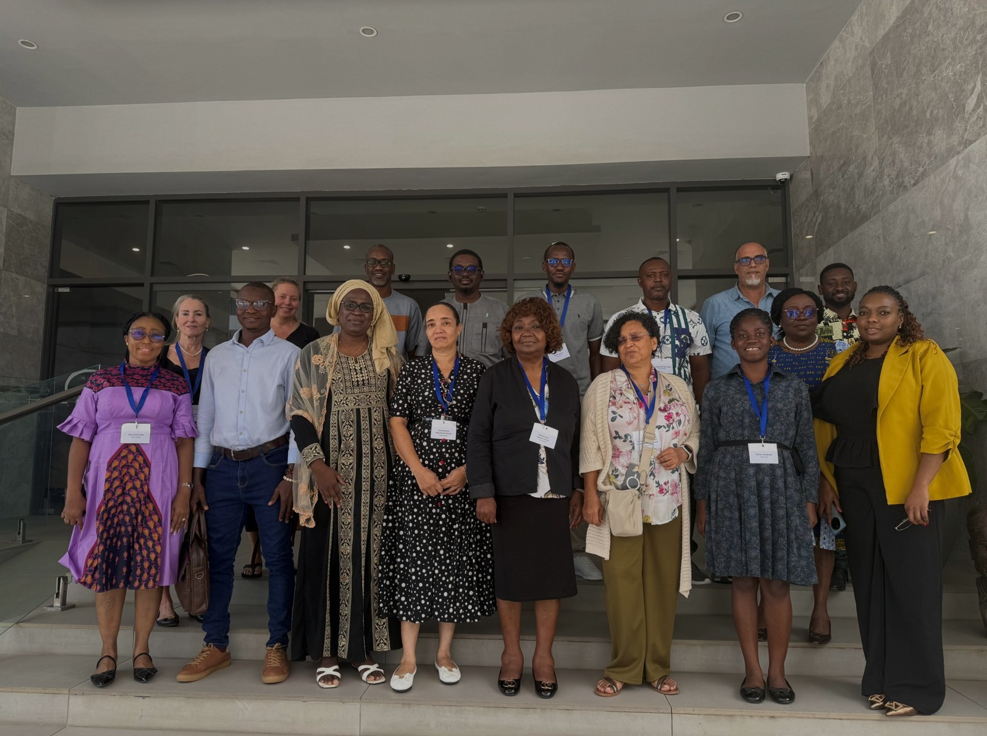
In September 2026, nutrition and food safety experts from nine African countries and Norway gathered in Accra, Ghana, for a week-long writing workshop. The workshop was organised under Theme 4 – Nutrition and Food Safety of the Science Plan of the EAF-Nansen Programme, which is implemented by the Food and Agriculture Organization of the United Nations (FAO) in close collaboration with the Institute of Marine Research (IMR), Norway, and funded by Norway through Norad.
Why small pelagic fish?
Small pelagic fish are among the most affordable and accessible animal-source foods in West Africa, and they play an important role in the diets of millions of people. Yet harmonised, chemically analysed data on their nutrient and contaminant content remain scarce. Without such data, it is difficult to quantify how much these fish contribute to healthy diets, or to give evidence-based advice on their safe consumption.
A unique regional dataset
The participants’ shared starting point was a regional dataset on four species – anchovy, flat sardinella, round sardinella and pilchard – sampled during research surveys with the RV Dr Fridtjof Nansen along the coast from Morocco to South Africa. Because the samples were collected and chemically analysed in a harmonised way, the dataset allows species and areas to be compared across the whole region.
Two papers, one risk–benefit perspective
During the week, participants worked in two groups, each drafting a manuscript:
Human Nutrition: the nutrient composition of small pelagic fish and their contribution to closing micronutrient gaps in the region.
Food Safety: levels of contaminants, including trace elements, polycyclic aromatic hydrocarbons (PAHs), dioxins, polychlorinated biphenyls (PCBs) and polybrominated diphenyl ethers (PBDEs), compared against EU and Codex limits.
The two papers are designed to be read together, providing a basis for a risk–benefit perspective on small pelagic fish in the diet – evidence that is directly relevant to national dietary guidance, fisheries management and food security policy in the region.
The team
The workshop brought together Jamal Chaira (Morocco), Boubacar M’Barek Mohamed (Mauritania), Ndèye Ndiaye and Oumar Gueye (Senegal), Matilda Steiner-Asiedu, Amy Atter, Theophilus Don Wazo Annan, Richard Stephen Ansong and Irene Nunya (Ghana), Yamoussa Camara (Guinea), Adalgisa Ramos (Guinea-Bissau), Oluwafemi Stephen (Nigeria), Avelina Victor and Edia Neves (Angola), Lusia Heita (Namibia), and Anne-Katrine Lundebye and Marian Kjellevold (IMR, Norway). The week was characterised by generous knowledge sharing and hard work, and it strengthened a regional network of scientists working on the nutritional value and safety of aquatic foods. Following the workshop, the groups will finalise the manuscripts for submission to peer-reviewed journals.
EAF-Nansen Programme (FAO): www.fao.org/in-action/eaf-nansen