
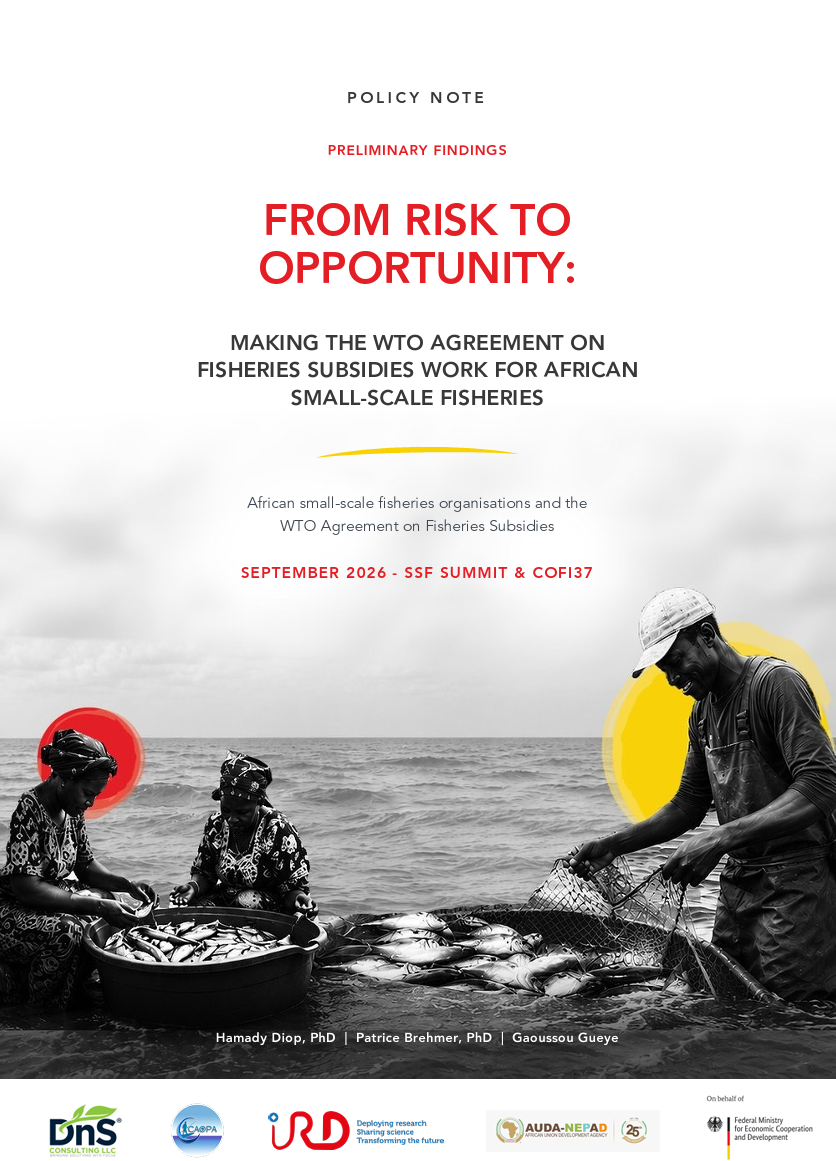
The study is the first assessment of the socio-economic implications of the WTO-FSA for African Small-Scale Fisheries (SSF), producing actionable recommendations that balance sustainability objectives with livelihood protection and gender equity.
The study, conducted by DnS Consulting, CAOPA and the French Research Institute for Development (IRD), supported by AUDA-NEPAD and commissioned by the German Federal Ministry for Economic Cooperation and Development (BMZ), sheds light on potential socio-economic implications of the WTO Agreement on Fisheries Subsidies (WTO-FSA) for African Small-Scale Fisheries (SSF).
The WTO FSA, which entered into force in September 2025, prohibits subsidies in the most critical situations, i.e. linked to illegal, unreported and unregulated (IUU) fishing, to fishing of overfished stocks and to fishing on the unregulated high seas (often referred to as “Fish 1”). The second wave of negotiations resumed in September this year aiming to discipline fisheries subsidies contributing to overcapacity and overfishing more broadly, known as “Fish 2”. Globally, SSF receive only around 16% of fisheries subsidies, while 90% of capacity-enhancing subsidies flow to large-scale fleets. While the agreement presents opportunities that could benefit sustainable fisheries management and thus coastal livelihoods through a decrease in global overcapacity and cuts in subsidies going to industrial fisheries, it also poses potential socio-economic risks for them. From a regional perspective, when effectively implemented, the Agreement can reduce industrial and illegal fishing activities that put pressure on African coastal waters, while African states retain the space to invest in monitoring, safety, post-harvest systems and livelihoods. However, it also risks cutting legitimate support for the already underfinanced SSF sector, which may have negative impact on food security, employment and coastal resilience, as SSF produce most of the fish eaten on the continent.
The study draws on consultations with 37 African fisheries organisations in 25 countries to inform negotiations and implementation. Overall, public support for African SSF is limited: 25 of 37 organisations (68%) receive no, or only partial and irregular, public fuel or operational support, while 36 of 37 report incursions by industrial or foreign vessels into artisanal fishing zones.
As recommendations, five priorities were identified by the consulted organisations:
1. Protect policy space for small-scale fisheries.
2. Differentiate livelihood support from harmful subsidies.
3. Invest in fisheries infrastructure rather than fishing capacity.
4. Protect women and the post-harvest economy.
5. Strengthen enforcement against industrial and illegal, unreported and unregulated fishing
The findings and recommendations provide crucial baseline evidence for the Fish 2 negotiations. Three preparatory Fish Weeks this autumn are intended to frame negotiations in 2026/2027. How Fish II treats special and differential treatment, transition periods and SSF will determine the value of the rules for Africa. “Fish 1” includes a “sunset” clause mandating that if a more comprehensive set of rules is not adopted within four years of the Agreement’s entry into force (by September 2029), the entire Agreement will be terminated, (unless otherwise decided by the General Council) underlining the urgency to support evidence-based discussions and decision making.
Find the preliminary findings in form of a policy note, which was created for stakeholders participating at the 37th session of the Committee on Fisheries (COFI) in September in Rome here:
COFI37-SSF-Summit-Briefing-Note-EN-Sep2026.pdf
The final results of the study will be published in November this year.